
Turn fragmented fulfillment into an AI-ready operating advantage
Fragmented fulfillment systems slow service delivery and hinder AI-driven automation. Blue Planet’s Gabriele Di Piazza explains how unifying inventory and orchestration on a common operating model helps CSPs simplify operations, accelerate service activation, and build a trusted data foundation that can connect fulfillment with operational context for AI.
Communications service providers (CSPs) are under pressure to launch services faster, improve efficiency, and prepare for AI-driven automation. Yet many fulfillment environments still rely on disconnected inventory and orchestration systems, each with its own data models, integrations, and workflows.
Every duplicated integration and inconsistent view of the network adds effort to service qualification, design, activation, and change. Replacing one legacy application at a time may improve an isolated process, but it does not resolve the underlying fragmentation. A unified fulfillment architecture addresses the foundation, helping CSPs reduce friction, accelerate delivery, and establish trusted context for automation and AI.
The real constraint is operating context
Fulfillment problems often surface at the order layer, but they usually begin earlier, with incomplete inventory, inconsistent service models, repeated discovery, and handoffs between systems that do not share the same context. Teams compensate through manual reconciliation, custom integrations, and exception handling.
Faster fulfillment does not come from automating isolated steps. It comes from connecting accurate network knowledge to repeatable execution across the order-to-activation lifecycle. When inventory and orchestration share an understanding of resources, services, topology, policies, relationships, and lifecycle state, teams can make more consistent decisions with fewer handoffs.
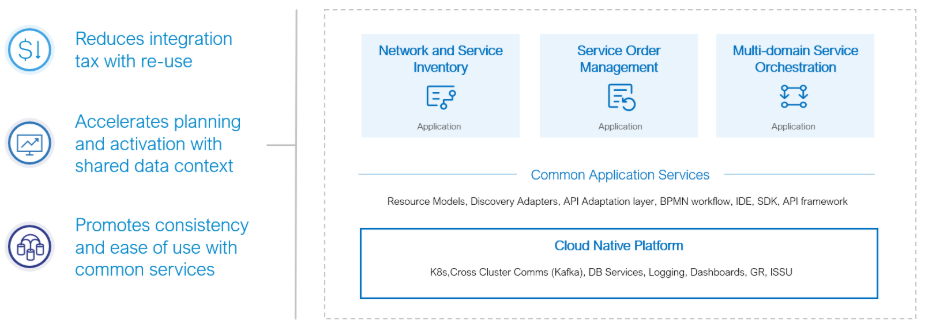
Figure 1: Reducing fulfillment complexity with a unified architecture
The same common models, discovery services, and resource relationships can provide the foundation for assurance, route analysis, and configuration data to contribute to a broader operational data fabric.
Turn shared architecture into measurable outcomes
Blue Planet brings inventory and orchestration together on a common architecture designed for reuse. Fewer integration points, less duplicated data handling, and consistent operational context from planning through activation can translate into meaningful improvements. Representative Blue Planet customer outcomes include:
- 75% reduction in network and service design time through improved data accuracy
- 90% reduction in service order fallout through tighter inventory and orchestration alignment
- 80% faster service activation by using accurate design and inventory data
This convergence also establishes the semantic foundation for a broader data fabric. Inventory and topology define what exists and how it is related; assurance contributes faults, performance and service-impact signals; route analysis adds traffic paths and routing behavior; and configuration data helps distinguish intended, approved and actual network state. A common data fabric connects these inputs so they can be understood as one operational picture rather than as separate application records.
These outcomes demonstrate the value of connecting inventory and orchestration instead of treating them as separate systems. Blue Planet achieves this through a cloud-native foundation, shared operational context, and AI-driven automation. Let's look at each of these key enablers in turn.
Simplifying operations with a cloud-native core
Our common fulfillment architecture is grounded in Blue Planet’s Cloud Native Platform, a Kubernetes-based foundation that securely unifies OSS applications across multi-vendor, multi-domain environments to reduce complexity and improve scale. CSPs gain deployment flexibility within cloud environments while reducing dependence on proprietary infrastructure.
That shared understanding is also the beginning of a common operational ontology: a consistent way to define network resources, services, dependencies, topology, and state so that fulfillment and adjacent operational functions can interpret the network in the same way.
While each application evolves independently, CSPs can take advantage of common application services such as standardized APIs and resource adapters that simplify integration and eliminate redundant data handling. The platform also provides a consistent user experience, shared policy and workflow management, low-code development tools, and managed services that help reduce operational overhead, minimize customization, provide user consistency, and accelerate change. The result is a more adaptable fulfillment environment that can evolve with changing business and network requirements without large-scale reinvestment
Creating a shared operational context
Blue Planet Inventory and Orchestration share a common data foundation, using a single discovery and provisioning framework to collect network information once and reuse it across planning and deployment processes. This eliminates duplicate data collection, reduces reconciliation effort, and provides a consistent view of network and service resources.
Because fulfillment decisions are based on the same trusted data used for network planning and inventory management, CSPs can reduce manual intervention, accelerate service delivery, and improve planning accuracy. Support for both current-state and future-state network views further streamlines the path from service design to activation with fewer operational handoffs.
Turning trusted context into AI-driven automation
This same operational context is what makes AI useful. An AI agent cannot make a reliable fulfillment decision from an isolated order, topology record, or inventory extract. It needs to understand resources, services, topology, policies, relationships, and lifecycle state together.
The ontology gives those inputs shared meaning, while the data fabric makes the related inventory, assurance, routing, and configuration context available for reasoning and action. Blue Planet AI Studio builds on this foundation by providing an environment for developing, coordinating, deploying, and governing AI agents and pipelines within fulfillment processes without adding another layer of operational complexity. Agents can therefore reason across the same relationships used by fulfillment workflows rather than reconstructing context separately for every task. Several emerging fulfillment use cases are gaining traction among CSPs like Lumen, including device model generation and digital network twin applications.
From fragmented fulfillment to an intelligent operating model
A common inventory and orchestration foundation based on the enablers noted above eliminates the duplication, inconsistent data, and manual handoffs that create service delays and operational friction across fulfillment. By connecting trusted network data to planning, design, activation, and service delivery, CSPs can move from fragmented execution to a shared operating model. Teams can standardize high-value integrations, reuse common services, and extend trusted context across the fulfillment lifecycle.
More importantly, convergence creates an extensible operational foundation. As assurance, route intelligence, and configuration state are connected through a common data fabric, the same trusted context can support decisions across fulfillment, operations, and increasingly autonomous workflows. The result is faster service delivery, reduced operational complexity, and a fulfillment environment that can confidently deploy AI and automation.
Explore more about a unified architecture on our website.