
Blue Planet Configuration and Change Management: Bringing trust to autonomous networks
Introducing Blue Planet Configuration and Change Management (CCM), a new product that helps communications service providers (CSPs) govern change more consistently across configuration, software lifecycle, compliance, and operations. Blue Planet’s Kailem Anderson explains how CCM helps create the trusted network state CSPs need to scale automation and advance toward autonomous networks.
Autonomous networks aren’t built on automation alone. They depend on trust – trust that the network’s state is accurate, current, compliant, and aligned with the systems and teams acting on it.
Today, we introduced Blue Planet Configuration and Change Management (CCM), a new product designed to help CSPs govern network change more consistently across multi-vendor environments. Running on the Blue Planet Cloud Native Platform, CCM brings configuration management, software lifecycle, compliance, and change governance together to help create the trusted operational foundation autonomous networks require.
As CSPs expand automation and begin embedding AI more deeply across operations, change is happening faster and in more places. Policy updates, routing changes, software upgrades, security patches, service modifications, and urgent fixes are taking place across complex hybrid environments where people, scripts, automation platforms, and domain tools may all be making changes.

This has created a new operational challenge: how do you maintain confidence in the network state when the pace of change keeps accelerating?
The stakes are high
- In Uptime Institute’s Annual Outage Analysis Report 2025, 80 percent of operators report that recent serious outages could have been prevented with better management, processes, and configuration.
- In a July ENISA report, Human errors were linked to 402 million user-hours lost across 35 incidents, with faulty software changes and updates responsible for the majority of that impact.
These pressures are making it clear that legacy approaches to configuration and change management are no longer enough. To see why, it helps to take a closer look at the challenges CSPs are facing.
The challenge
For years, configuration and change management has been treated as a technical discipline focused on devices, domain tools, and isolated workflows. That model won’t work for modern operations.
Today, change is happening across the full operational environment. Some changes are planned, others are reactive. Some are manual, and increasingly, others are automated. But in many networks, the intelligence around those changes remains fragmented.
Configuration backups may sit in one system, compliance checks in another, and software image management in a third. Change activity may still depend on vendor utilities, manual command line interface (CLI) intervention, scripts, or disconnected automation pipelines.
The issue is not that change is invisible. It is that change is often tracked in silos.
This becomes especially critical during unplanned network events. When service issues occur, engineers may need to act immediately by activating a port, adding a route, replacing a faulty card, or making a direct device-level change to restore service. Those interventions are often necessary, but they are not always documented. If the live configuration has already drifted from the approved baseline, even a well-intended emergency fix can create a larger service impact.
The same is true for planned changes applied on top of an inaccurate network state. In today’s hybrid operating environment, where manual procedures still coexist with growing levels of automation, maintaining a trusted view of network state has become critical.
As a result, service providers can struggle to answer some of the most important operational questions:
- What changed?
- When did it change?
- Who changed it?
- Was it authorized?
- Did it align to the intended baseline?
- Did it affect service behavior?
When those answers are hard to find, confidence in the network state starts to erode.
Why this matters now
AI can accelerate decisions, but it can’t compensate for an inaccurate understanding of network state. If automation is acting on incomplete, outdated, or non-compliant information, it can amplify operational risk rather than reduce it.
This is not just about improving a long-established category. It is about meeting a new operational requirement. Autonomous networks depend on accurate, shared, and current operational data. But in today’s hybrid operating model, where people and automation are both driving change, this is becoming harder.
Service providers not only need to know that a change occurred, but also whether device configurations and software versions still comply with the policies, standards, and security rules they are expected to meet. That includes knowing whether a port has been left open after a maintenance window, whether user access privileges have drifted beyond what was authorized, or whether an IP address has been inadvertently exposed.
When compliance checks are periodic or disconnected from daily operations, these gaps can go unnoticed, weakening security posture, operational confidence, and trust in the network state that automation needs.
How Blue Planet Configuration and Change Management can help
Blue Planet Configuration and Change Management gives service providers a more unified way to govern change across multi-vendor networks. Traditional configuration management solutions were designed primarily to manage devices, but today’s operational environments require organizations to govern change across devices, software, policies, workflows, and automation systems simultaneously.
By bringing device configuration, software lifecycle management, compliance, and change control together across critical OSS workflows, CCM helps teams reduce operational silos, improve visibility into the actual network state, and manage change with greater consistency. The result is a stronger operational foundation for automation.
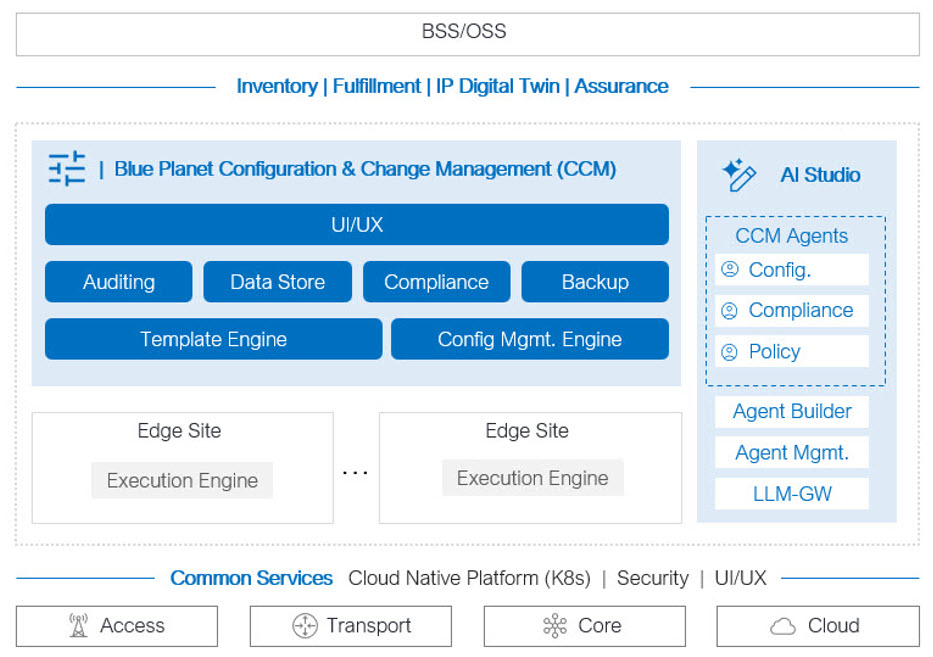
Figure 1. Blue Planet Configuration and Change Management architecture
With Blue Planet Configuration and Change Management, operators can:
- Establish and maintain authoritative configuration baselines
- Continuously detect and remediate configuration drift before it impacts service quality or compliance
- Compare live device configurations and software versions against defined policies to identify compliance violations and strengthen security posture
- Govern configuration and software changes through controlled workflows
- Reduce software lifecycle complexity with centralized version, upgrade, and image management
- Support repeatable Day 0 and Day 1 workflows
- Maintain a clear record of change activity to simplify troubleshooting, rollback, and recovery
- Reuse existing Ansible playbooks and incorporate new ones to extend automation without starting from scratch
This matters because the challenge is no longer just configuration. It is giving service providers the visibility, control, and consistency they need to support autonomous network transformation on a more reliable operational foundation.
A different approach to change
What makes Blue Planet Configuration and Change Management different is not just the depth of its features – it’s how the solution fits into the broader operational picture.
When combined with Blue Planet’s inventory, orchestration, assurance, and AI Studio products, CCM becomes part of a closed-loop operational framework that helps service providers understand not only what changed, but how those changes affect services, performance, compliance, and business outcomes.
- Blue Planet Inventory - Configuration and Change Management can use authoritative resource and topology context to strengthen the accuracy of operational state.
- Blue Planet Orchestration - change governance can be embedded directly into service activation workflows.
- Blue Planet Unified Assurance and Analytics - change activity can be correlated with faults, performance, and service quality.
- Blue Planet AI Studio - service providers can apply AI-enabled analysis to drift detection, compliance validation, and change risk across large-scale environments.
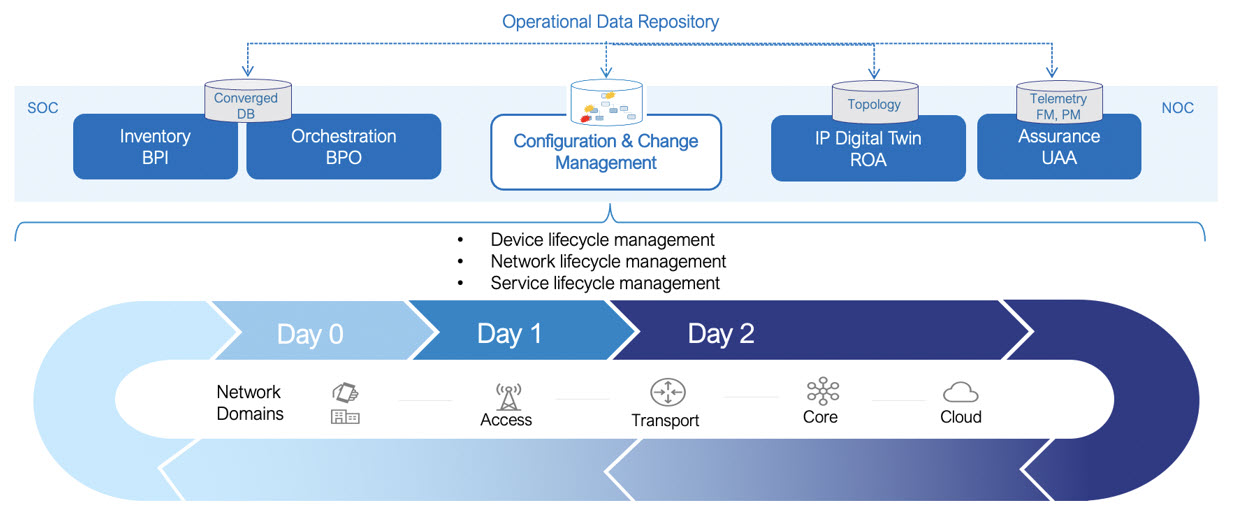 Figure 2. How Blue Planet’s portfolio works together to create a more complete and accurate view of the network state
The bottom line
Service providers are not moving toward autonomous networks in a clean, all-at-once transition. Manual and automated operations must coexist. That makes effective change governance a critical part of moving forward.
Blue Planet Configuration and Change Management is designed for that reality, helping create a trusted network state for service providers by governing change more consistently across the operational environment.
Because the future of autonomous networking isn’t just about automating change. It’s about governing change with confidence.